AGIBOT proposes Worken to measure real robot work
At AGIBOT Innovation Day 2026 in Shanghai, the Chinese robotics company proposed a new metric called Worken, short for 'Work' and 'Token,' meant to measure how much productive work robots actually perform in real-worl...
·1 min read·AB
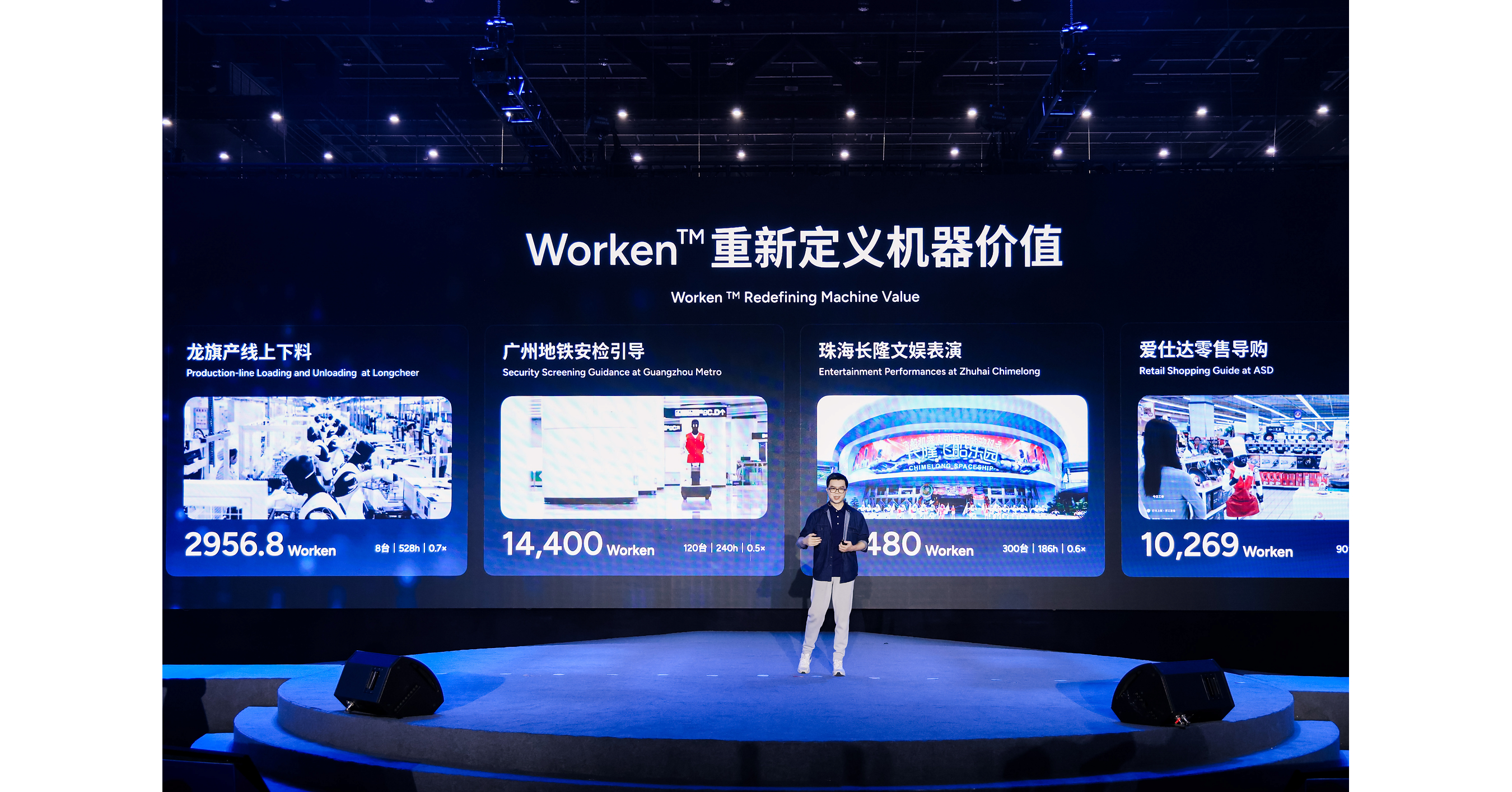
At AGIBOT Innovation Day 2026 in Shanghai, the Chinese robotics company proposed a new metric called Worken, short for 'Work' and 'Token,' meant to measure how much productive work robots actually perform in real-world deployments rather than simply counting units manufactured or shipped. AGIBOT defines it as 'Effective Intelligent Work Hours,' calculated as the number of active robots multiplied by autonomous working hours and an output efficiency ratio compared to a human-performance benchmark.
The company also unveiled several products at the event: the AHA3 integrated hardware platform combining locomotion, interaction, and task intelligence; a GO-3 Preview embodied AI foundation model built around a world reasoning and action framework; the WITA-Omni omni-modal interaction model; the G2 Max industrial robot, with 21 degrees of freedom and a dual-arm handling capacity up to 40 kg; and Link-U OS 1.0, described as the first operating system built specifically for embodied intelligence, which AGIBOT plans to open source by the end of 2026.
AGIBOT highlighted existing deployments at sites including Longcheer tablet production, semiconductor packaging, Guangzhou Metro, and the Chimelong tourism complex, framing Worken as a way to compare productivity across different kinds of real-world robot work.
Why it matters
A standardized way to measure robot productivity, rather than unit counts, could make it easier for buyers to compare competing robotics vendors.
Source: AGIBOT